A 172nm excimer lamp differs from conventional UV light sources mainly in its wavelength, photon energy, emission characteristics, and photochemical reaction mechanism. Operating in the vacuum ultraviolet (VUV) spectrum, it delivers high-energy photons that can directly break certain molecular bonds and initiate surface reactions. Unlike conventional UV systems that primarily rely on longer-wavelength radiation, 172nm excimer technology is particularly useful for precision organic contaminant removal, surface activation, and specialized coating processes.
For manufacturers working with semiconductor wafers, optical components, advanced coatings, and ultrapure water systems, understanding these differences is essential when selecting an appropriate industrial UV light source.
What Is a 172nm Excimer Lamp?
A 172nm excimer lamp is a vacuum ultraviolet (VUV) light source that generates radiation centered around a wavelength of 172 nanometers. Industrial 172nm excimer lamps commonly use xenon-based dielectric barrier discharge (DBD) technology to produce high-energy ultraviolet radiation.
During operation, an alternating high-voltage electrical field excites the gas inside the lamp. Excited xenon species form short-lived excimer molecules, which release energy as VUV photons when they return to a lower-energy state.
The resulting narrow-band emission is different from the broader spectral output of many conventional UV sources. Its short wavelength also means that oxygen and other materials strongly absorb the radiation, making the optical path and treatment environment important parts of system design.
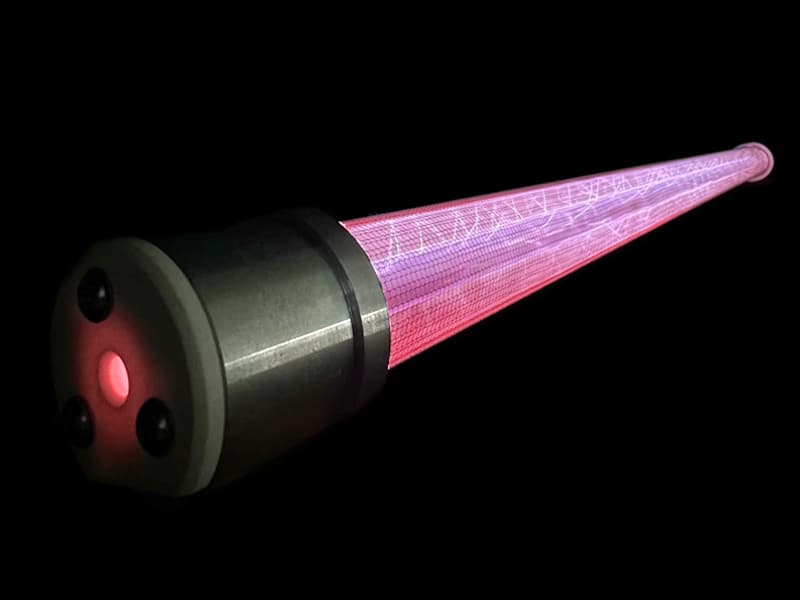
For industrial applications, the value of this technology is not simply its short wavelength. It is the combination of high photon energy, controlled spectral output, and the ability to initiate surface-level photochemical reactions.
How Is 172nm Different from Other UV Wavelengths?
The main physical difference is photon energy. Shorter wavelengths carry more energy per photon, which influences the types of photochemical reactions that can occur.
The photon energy can be estimated using the Planck-Einstein equation:
E = hc / λ
At 172nm, a single photon carries approximately 7.21 eV of energy. This is higher than the photon energy of commonly used 185nm, 254nm, and 365nm UV radiation.
The following table compares representative wavelengths and their approximate photon energies:
| UV Wavelength | Typical Light Source | Photon Energy | Common Process Focus |
|---|---|---|---|
| 172nm | Xenon Excimer Lamp | 7.21 eV | Photochemical cleaning and surface modification |
| 185nm | Low-Pressure Mercury Lamp | 6.70 eV | Ozone generation and organic oxidation |
| 222nm | Far-UVC Excimer Lamp | 5.59 eV | Specialized far-UVC disinfection |
| 254nm | Low-Pressure Mercury Lamp | 4.88 eV | Germicidal UV applications |
| 308nm | Excimer Lamp | 4.03 eV | Specialized photochemical and medical applications |
| 365nm | UV LED | 3.40 eV | UV adhesive and coating curing |
Note: Photon energies are theoretical values calculated from the corresponding wavelengths. The listed applications are representative rather than exclusive. Actual process performance also depends on irradiance, exposure time, material absorption, and process conditions.
Higher photon energy does not automatically mean better performance in every application. The appropriate wavelength depends on the chemical reaction, material properties, and processing requirements.
172nm Excimer Lamps vs. Conventional Mercury UV Lamps
The most important difference between a 172nm excimer lamp and a conventional low-pressure mercury UV lamp is their emission spectrum and operating mechanism.
Low-pressure mercury lamps commonly emit strong spectral lines at 254nm, and some configurations also emit 185nm radiation. In contrast, xenon excimer lamps generate narrow-band VUV radiation centered around 172nm through dielectric barrier discharge.
This distinction matters in applications where direct photochemical reactions, precise surface treatment, and low thermal impact are important.
| Comparison | 172nm Excimer Lamp | Mercury UV Lamp |
|---|---|---|
| Emission | Narrow-band 172nm VUV | Characteristic mercury emission lines |
| Photon Energy | Approximately 7.21 eV | Depends on emission wavelength |
| Light Generation | Dielectric barrier discharge | Mercury vapor discharge |
| Mercury Content | Mercury-free | Contains mercury |
| Thermal Characteristics | Suitable for low-thermal-load surface processes | Thermal management depends on lamp type and system design |
| Typical Applications | Organic cleaning, surface activation, specialized curing | Disinfection, oxidation, and conventional UV processing |
Another important consideration is startup behavior. Excimer lamps can provide rapid on/off operation without the conventional warm-up cycle associated with many mercury UV systems. This can be useful in automated manufacturing lines where exposure timing needs to follow production cycles.
However, mercury lamps remain suitable for many established UV processes. Replacing them with 172nm technology should be based on process testing rather than wavelength alone.
What Makes 172nm Technology Different from UV LED Sources?
172nm excimer lamps and UV LEDs differ in both wavelength and light-generation technology. Industrial UV LEDs commonly operate at wavelengths such as 365nm, 385nm, and 395nm, depending on the intended application.
These longer-wavelength UV LEDs are widely used for adhesive curing, ink curing, and coating polymerization. Their output can be matched to the absorption characteristics of specific photoinitiators and coating formulations.
A 172nm excimer lamp, on the other hand, produces much higher-energy VUV photons. Its radiation can initiate direct photochemical reactions at material surfaces and generate reactive oxygen species under suitable atmospheric conditions.
This makes the two technologies useful for different processing requirements:
- 172nm excimer lamps: organic contaminant removal, surface activation, and specialized surface curing.
- UV LEDs: controlled curing of UV-sensitive adhesives, inks, and coatings.
- Conventional UV lamps: established disinfection, curing, and photochemical applications depending on wavelength.
The key selection factor is the reaction required by the production process. A UV LED may be more appropriate for curing a bulk coating, while a 172nm excimer lamp may be better suited to a surface treatment that requires high-energy VUV radiation.
How Does a 172nm Excimer Lamp Clean and Modify Surfaces?
A 172nm excimer lamp supports surface treatment through direct photolysis and oxygen-related photochemical reactions. These mechanisms can work together to remove organic residues and change surface properties.
First, high-energy VUV photons interact with organic molecules on the material surface. Depending on the molecular structure and absorption characteristics, the radiation can break chemical bonds and generate smaller molecular fragments.
Second, oxygen in the surrounding environment absorbs 172nm radiation and produces reactive oxygen species, including atomic oxygen. These species can oxidize organic contaminants into smaller volatile products, such as carbon dioxide and water vapor.
Third, the removal of surface contaminants and changes in surface chemistry can improve wettability and support subsequent coating, bonding, or deposition processes.
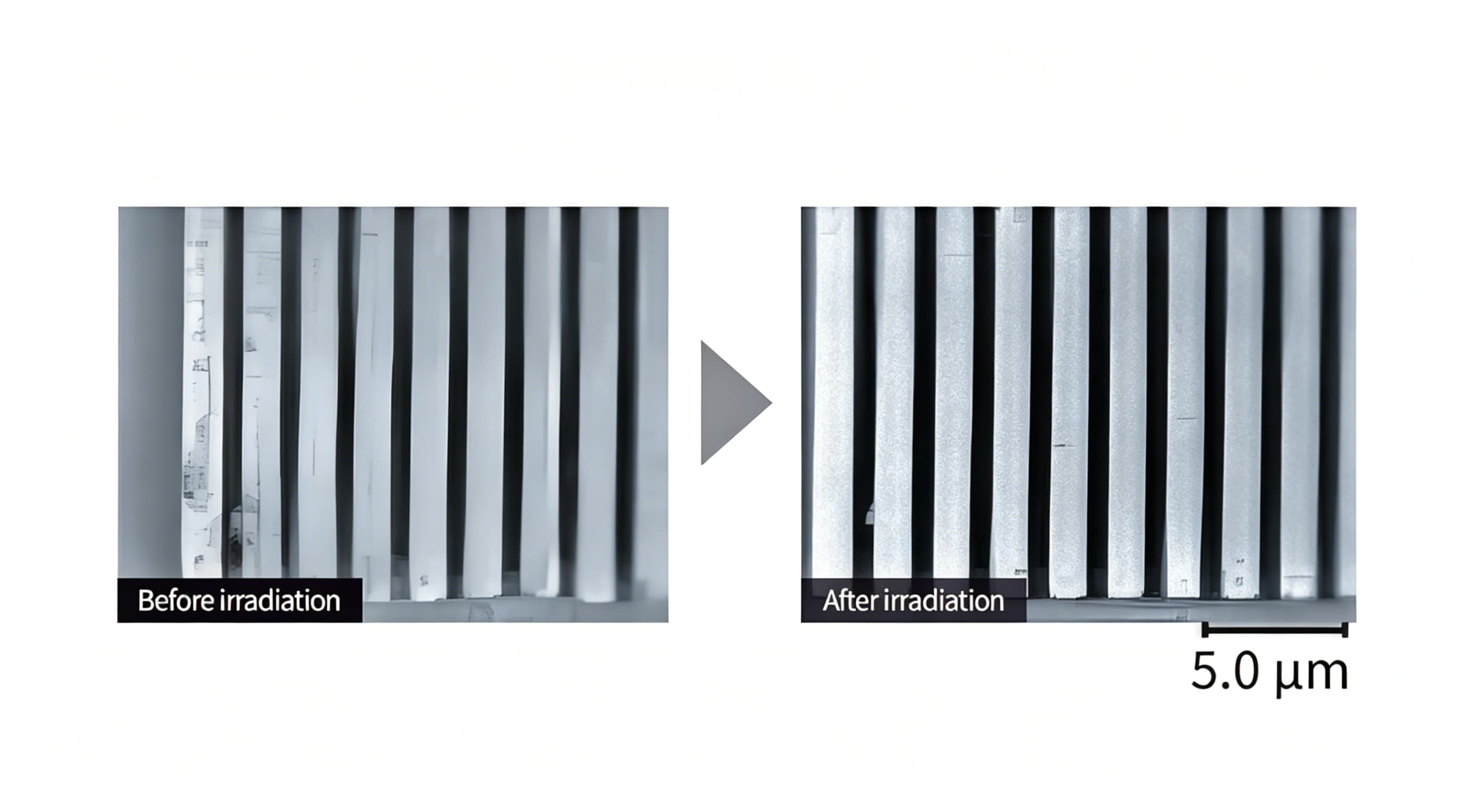
For semiconductor manufacturing, this approach is useful when removing trace organic residues from wafers, masks, and other precision components. For optical and display materials, surface activation can help improve the consistency of subsequent processing steps.
Explore GMY's 172nm Excimer VUV Light Source for product information covering semiconductor cleaning, optical components, and surface modification applications.
Industrial Applications Where 172nm Excimer Lamps Make a Difference
The advantages of 172nm technology are most relevant in industrial processes that require controlled surface chemistry, organic contaminant removal, or specialized VUV-driven reactions.
Semiconductor Wafer and Mask Cleaning
Semiconductor processing requires extremely clean surfaces because organic residues can interfere with bonding, deposition, and other precision manufacturing steps.
172nm VUV radiation provides a dry photochemical approach to removing organic contamination from silicon wafers, fine metal masks, photomasks, and related components. Compared with wet chemical cleaning, it can reduce dependence on solvents and rinsing steps for suitable surface contaminants.
Surface Modification and Adhesion Improvement
Materials such as polymers, metals, and titanium components may require surface activation before coating, bonding, or other downstream processes.
172nm irradiation can remove organic residues and modify surface chemistry, helping improve wettability and interfacial compatibility. The actual results depend on the material, treatment dose, and processing environment.
Industrial Coating and Matte Surface Finishing
In specialized coating processes, 172nm VUV radiation can initiate rapid surface crosslinking and create a controlled micro-textured finish. This is particularly relevant to paint protection films, soft-touch coatings, packaging inks, and certain PCB coating applications.
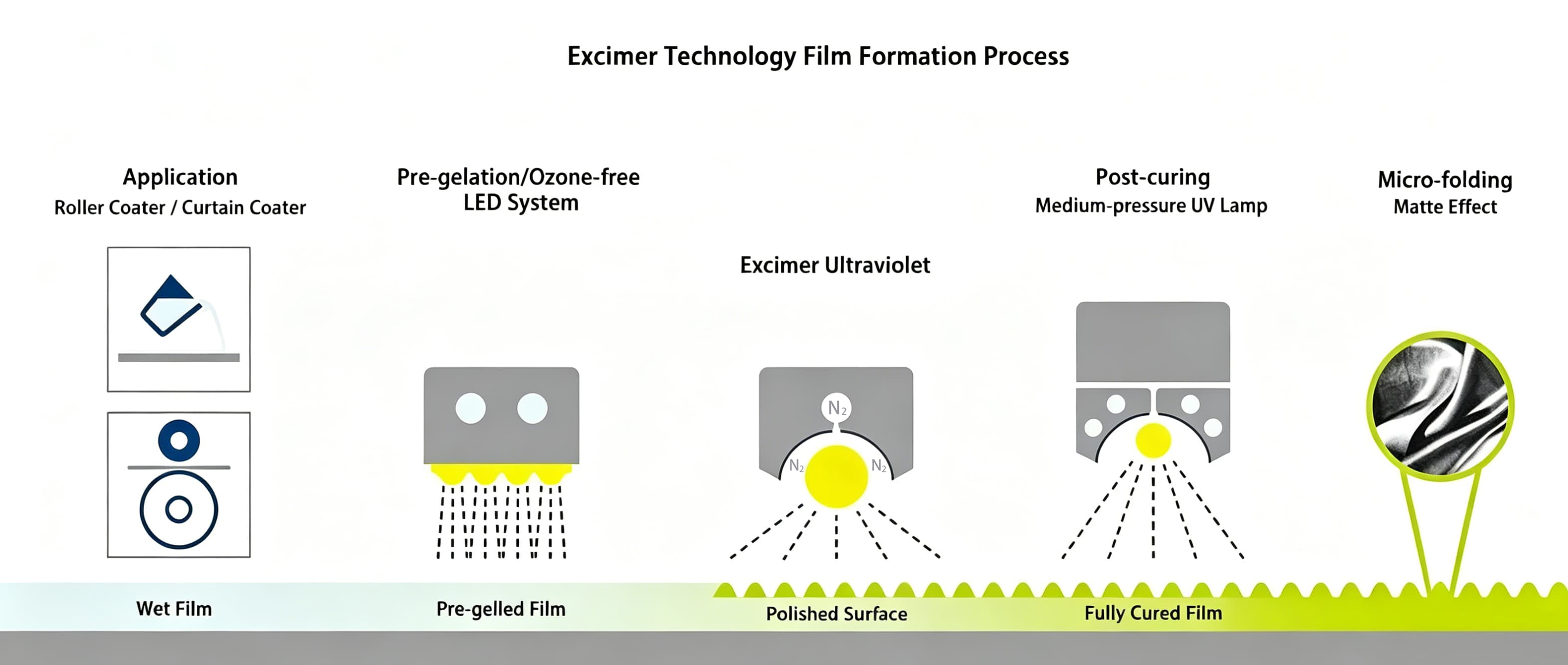
GMY offers a High Power 172nm Excimer Lamp for Matte Surface Photocuring and Coating Modification, with listed product power options ranging from 350W to 1000W. The specific configuration should be matched to the coating formulation, line speed, and equipment requirements.
Ultrapure Water TOC Reduction
In semiconductor and laboratory water systems, trace organic compounds can affect ultrapure water quality. 172nm VUV radiation can promote photochemical oxidation and help reduce total organic carbon (TOC).
The process uses high-energy photons and reactive species to break down organic compounds. Its effectiveness depends on water composition, UV dose, flow rate, and reactor design.
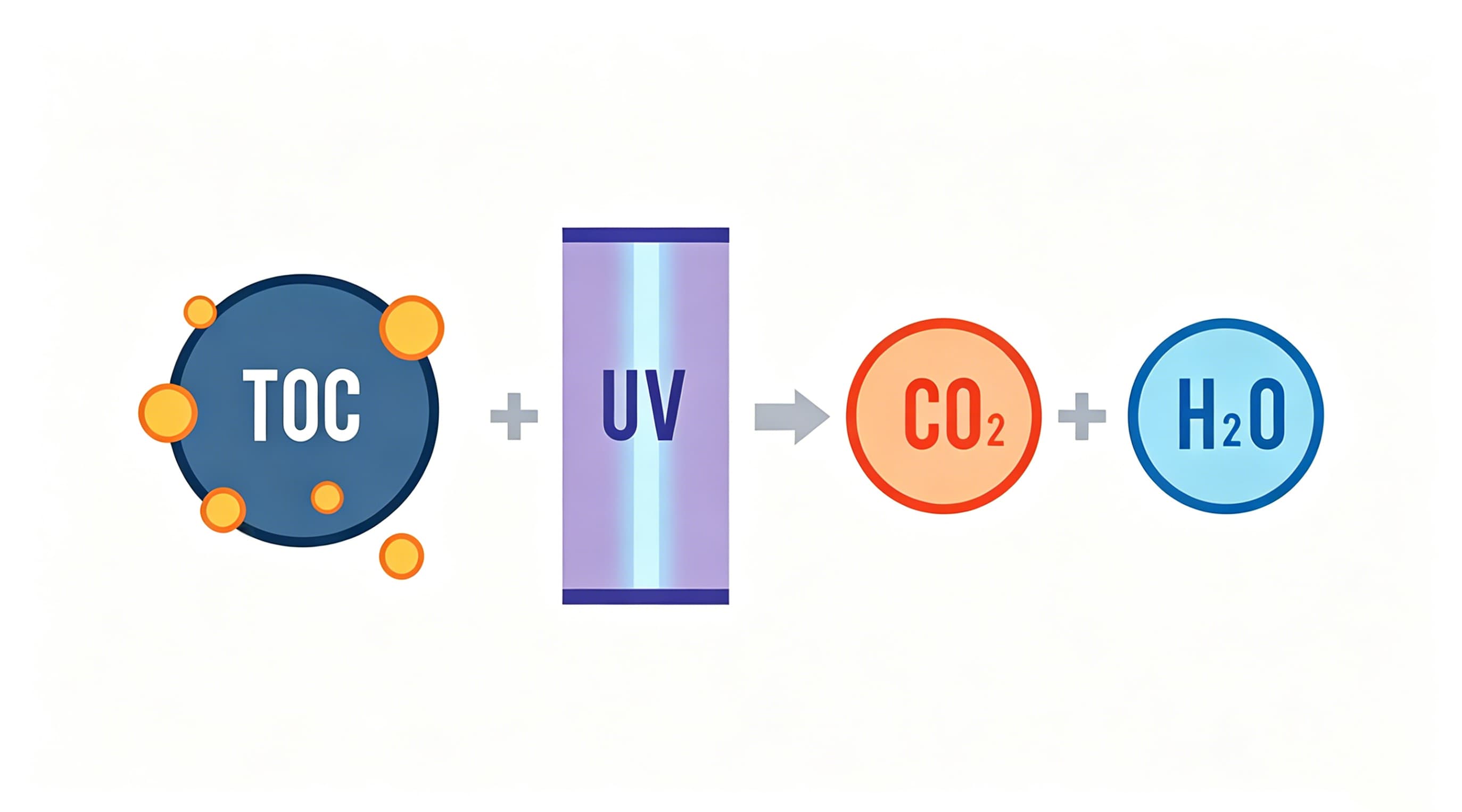
For this application, GMY provides a 172nm Excimer Lamp for Ultrapure Water TOC Degradation. Its published specifications include 15W and 20W versions, with UV irradiance above 23 mW/cm² at a measurement distance of 6mm.
AI Server Cold Plate Cleaning and CDU Water Treatment
Liquid cooling systems used in AI server infrastructure require careful control of organic contaminants and particles. Residues in cold plates and coolant circulation loops can create additional maintenance and system reliability challenges.
A 172nm VUV module can support organic contaminant breakdown on cold plate surfaces and TOC reduction in CDU makeup water systems. The treatment configuration must be designed around the actual liquid circuit, material compatibility, and water quality requirements.
GMY's 172nm Excimer Module for Cold Plate Organic Particle Removal and Water Purification is listed with a 20W ±10% lamp power, treatment uniformity of ±10%, and a center-point irradiance above 20 mW/cm² at 1mm.
What Should Manufacturers Consider When Selecting a 172nm Excimer Lamp?
Selecting an industrial 172nm excimer lamp requires more than comparing rated power. The lamp must match the target material, treatment area, process speed, and operating environment.
1. Wavelength and Irradiance
Confirm that the 172nm output and irradiance are suitable for the intended reaction. Irradiance alone does not determine process performance; exposure time and treatment distance also affect the delivered UV dose.
2. Lamp Dimensions and Effective Emission Length
The lamp's diameter, total length, and emission length should match the equipment layout and required treatment width. These details are particularly important for conveyor-based production systems.
3. Cooling and Thermal Management
High-power systems may require water or other specified cooling arrangements. The cooling method should be selected according to the lamp configuration and expected operating conditions.
4. Atmosphere and Optical Distance
Oxygen strongly absorbs 172nm radiation. Therefore, the distance between the lamp and target surface, gas composition, and process chamber design can significantly affect the radiation reaching the workpiece. Nitrogen control may be required for particular curing applications.
5. Power Supply and System Integration
Excimer lamps require compatible electrical drive systems. Manufacturers should verify power supply matching, electrical connections, control interfaces, and installation requirements before integrating a lamp into existing equipment.
6. Safety and Maintenance
Although 172nm excimer lamps are mercury-free, they still require appropriate UV shielding, enclosed treatment areas, interlocks, and ozone exhaust management. Lamp output and service life should also be evaluated under actual operating conditions.
Why Choose the Right 172nm Excimer Lamp Configuration?
Different industrial processes require different optical and electrical configurations. A lamp designed for semiconductor surface cleaning may not have the same power, emission length, or cooling requirements as a lamp used in high-speed coating production.
For example, GMY's published 172nm product specifications cover several configurations:
| Product Configuration | Published Power | Typical Application |
|---|---|---|
| 172nm VUV Light Source | 5W–1000W across listed configurations | Cleaning, modification, and curing |
| Ultrapure Water TOC Lamp | 15W / 20W | Water TOC reduction |
| High-Power Photocuring Lamp | 350W–1000W listed models | Coating and surface finishing |
| Cold Plate Treatment Module | 20W ±10% | Organic particle removal and water treatment |
Note: These are published specifications for different GMY product configurations, not interchangeable operating options. Please refer to the corresponding product page for dimensions, irradiance, cooling, and other technical details.
A suitable lamp configuration should be evaluated through application-specific testing. This helps manufacturers verify treatment uniformity, process speed, material compatibility, and long-term operating stability before full-scale deployment.
Frequently Asked Questions About 172nm Excimer Lamps
1. What is the main advantage of a 172nm excimer lamp?
Its main advantage is the combination of high-energy VUV photons and controlled narrow-band emission. These characteristics support direct photochemical reactions, organic contaminant removal, and surface modification without relying primarily on thermal processing.
2. Is a 172nm excimer lamp better than a 254nm mercury UV lamp?
Not for every application. A 172nm excimer lamp offers higher photon energy and is suitable for specialized VUV surface treatment. A 254nm mercury lamp remains useful for established germicidal and other UV processes. The correct choice depends on the required reaction and processing conditions.
3. Are 172nm excimer lamps mercury-free?
Yes. GMY's 172nm excimer lamp products use mercury-free dielectric barrier discharge technology. This eliminates the need for mercury inside the lamp, although appropriate UV and ozone safety controls are still necessary.
4. Can 172nm excimer lamps clean semiconductor wafers?
Yes. They can be used for photochemical removal of organic residues and surface preparation on semiconductor wafers and related components. Treatment results depend on contamination type, exposure conditions, and substrate compatibility.
5. Can 172nm VUV light be used for water purification?
Yes. 172nm VUV radiation can promote the oxidation and breakdown of organic compounds, supporting TOC reduction in ultrapure water systems. The final performance depends on water composition, irradiance, flow rate, and reactor design.
6. What factors determine the service performance of a 172nm excimer lamp?
Important factors include lamp power, irradiance, exposure distance, operating time, cooling conditions, gas environment, and electrical matching. Regular output monitoring and appropriate maintenance are also important for consistent industrial processing.
Conclusion
172nm excimer lamps stand out from other UV light sources because of their high-energy VUV emission, narrow-band spectral characteristics, and ability to drive photochemical surface reactions. These features make them particularly relevant to semiconductor cleaning, material surface activation, industrial coating, and ultrapure water treatment.
However, wavelength alone does not determine the best solution. Irradiance, exposure time, material compatibility, cooling, and equipment integration all play important roles in achieving consistent results.
GMY provides different 172nm excimer lamp configurations for industrial cleaning, surface modification, photocuring, and water treatment applications. Manufacturers can evaluate the corresponding product specifications and select a suitable solution according to their actual processing requirements.
For more information about 172nm excimer lamp technology and application-specific configurations, visit GMY Lighting Technology.